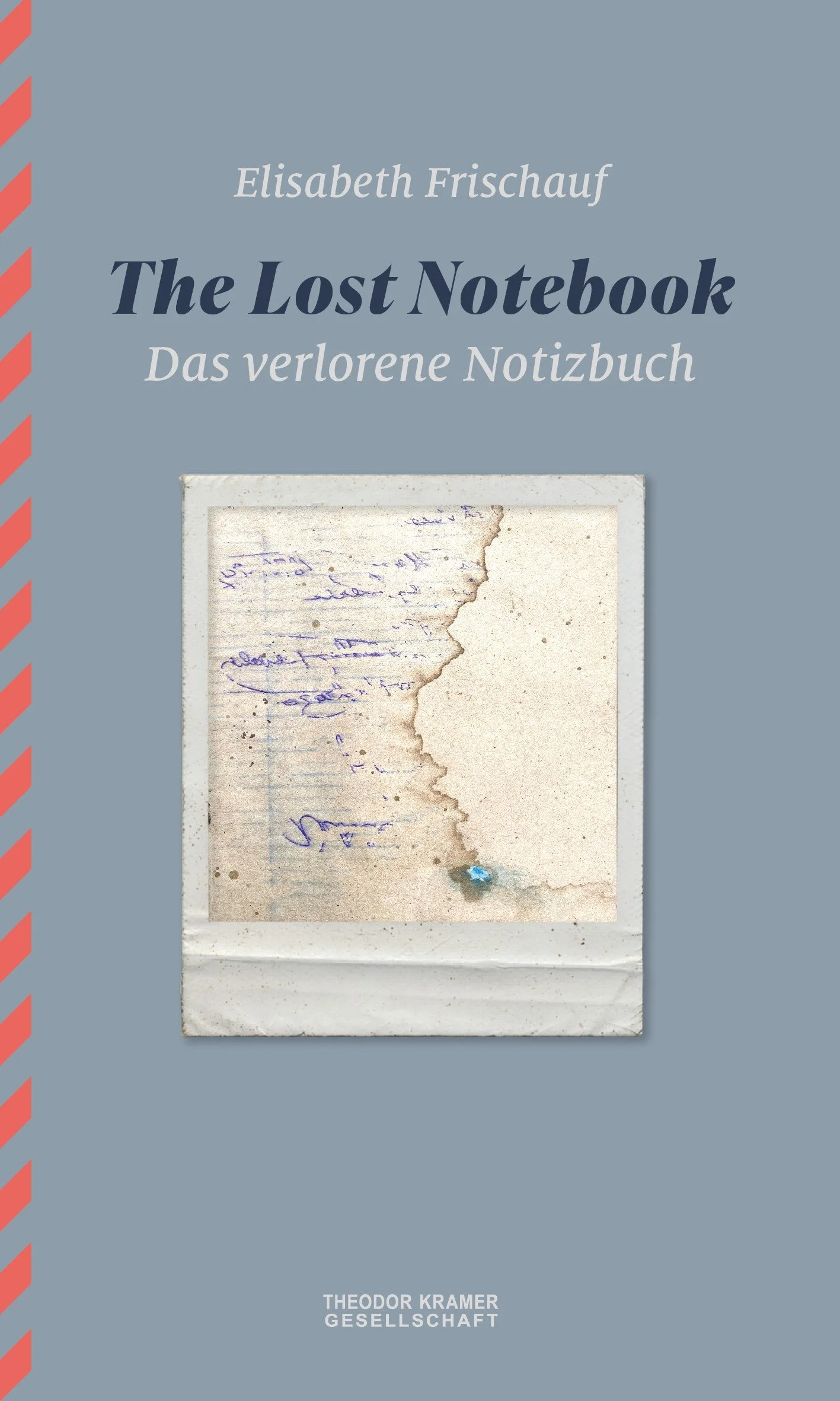
Join us for an intriguing book presentation of The Lost Notebook / Das verlorene Notizbuch by Austrian-American author Elisabeth Frischauf, who will read selected poems from her book, accompanied by projected photographs of her artwork. The reading will be followed by a discussion with the author, who will offer further insight into her work, as well as a Q&A with the audience.
The Lost Notebook: A Family Memoir As Told in Poems is the second volume in Elisabeth Frischauf’s triology. The first volume, They Clasp My Hand | Die meine Hand ergreifen, was presented at the Austrian Embassy Washington in 2023. Both volumes are long-form poetry memoirs and were published in English and German. Through her moving poetry, Elisabeth Frischauf tells the story of her family fleeing Austria in 1938, the loss of her grandmothers and extended family during the Holocaust, and her experiences growing up in America as a daughter of refugees. The Lost Notebook expands on the themes of loss, recreation through memory, new family history information, and how Elisabeth Frischauf established her own connection with the past and its places without her parents’ filters. The title is based on a real-life experience: On the way back from a trip to Vienna, a notebook filled with extensive notes and recollections was lost on the plane.
Doors open at 6:15 PM. The event starts at 7:00 PM and is followed by an Austrian wine reception.
ABOUT THE AUTHOR
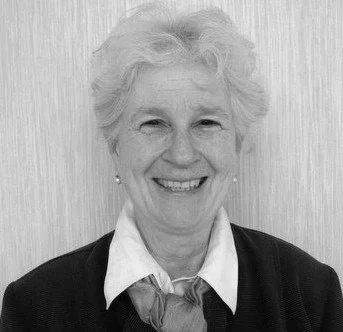
© Image: Elisabeth Frischauf
Elisabeth Frischauf is an Austrian-American psychiatrist, poet, and visual artist. Born in 1947 on the Upper West Side of Manhattan, where her parents married and settled to raise a family, Frischauf’s mother, Else Pappenheim-Frischauf, was forced to flee Austria in the midst of her psychoanalytic training. Frischauf’s father completed his last year of high school in Vienna during the Nazi regime and then fled. In 1956, when Elisabeth Frischauf was nine, the family visited Austria, met surviving relatives, and re-established a connection with their homeland. A few years after meeting her great aunt, Marie Pappenheim-Frischauf, she discovered poems written from Lager Gurs in a slim volume on her parents’ ample bookshelves. “If one can write poems from a prison camp,” then I too must write them, she told herself.
“Writing poetry is intimately bound up with my artwork. These many avenues allow me to convey my personal perspective on the world. Being multilingual and anchored in two cultures—the family homeland in Austria and New York City—enriches everything I do.” — Elisabeth Frischauf