Join us for an intriguing lecture and book presentation by Dr. Megan Brandow-Faller about Child Creativity and the Visual Arts: From Secessionist Vienna to Postwar America. After the lecture, a panel discussion with Dr. Megan Brandow-Faller and Dr. Steven Beller will take place, followed by a Q&A with the audience.
From the ‘creative corners’ found in postwar suburban ranch homes to the proliferation of children’s art exhibitions in public schools and libraries, Secessionist notions of child creativity burned brightly in postwar America. That all children are inherently creative with unique access to imaginative and expressive powers—remains ubiquitous in contemporary American society. This lecture examines the intellectual-cultural roots of commonplace notions of children’s creativity born in Secessionist Vienna, excavating the transmission of these ideas through the lens of three critical intermediaries:
Franz Cižek, often called the ‘patriarch’ of progressive art education and one of the first art educators to allow children to draw from their imaginations;
Emmy Zweybrück, who ran a successful craft school for girls and commercial workshops based on ideas similar to Cižek but with a greater emphasis on traditionally-feminine media and the transmission of solid handcraft knowledge;
and Viktor Lowenfeld, a Cižek pupil widely considered the most influential figure in 20th-century American art education who shifted the emphasis of creative art education from aesthetics to its therapeutic and developmental potential.
Doors open at 6:15 PM. The event starts at 7:00 PM and is followed by an Austrian wine reception.
ABOUT THE PANELISTS
Dr. Megan Brandow-Faller is Professor of History at the City University of New York Kingsborough and also teaches at the CUNY Graduate Center and the 92nd Street Y. Her research focuses on art and design in Secessionist and interwar Vienna, including children’s art and artistic toys of the Vienna Secession; expressionist ceramics of the Wiener Werkstätte; folk art and modernism; and women’s art education. She is the editor of Childhood by Design: Toys and the Material Culture of Childhood, 1700-present (Bloomsbury 2018) and the author of The Female Secession: Art and the Decorative at the Viennese Women’s Academy (Penn State University Press, 2020) and co-editor (with Laura Morowitz) of Erasures and Eradications in Modern Viennese Art Architecture and Design (Routledge, 2022). Brandow-Faller contributed two catalogue essays for the retrospective exhibition Die Frauen der Wiener Werkstätte at Vienna’s Museum of Applied Arts (2021). Her newest project, Child Creativity and the Visual Arts: From Secessionist Vienna to Postwar America (Bloomsbury Academic, 2025) focuses on the dissemination and popularization of Secessionist ideas of child creativity in postwar America. Brandow-Faller is currently pursuing an intellectual biography on Viktor Lowenfeld as a member of the 2025/26 Center for Jewish Studies Working Group on Jewish Migration, CUNY Graduate Center.
Dr. Steven Beller was born in London, England, in 1958 and studied history at the University of Cambridge. He was a Research Fellow at Peterhouse, Cambridge, from 1985 to 1989, and has held research posts in Princeton, Vienna, and Washington DC. His books include Vienna and the Jews, 1867-1938: A Cultural History (Cambridge, 1989); Theodor Herzl (Halban, 1991, 2004); Francis Joseph (Longman, 1996), A Concise History of Austria (Cambridge, 2006); Antisemitism: A Very Short Introduction (Oxford, 2007, 2015), and Democracy in the series All That Matters (Hodder & Stoughton, 2013). He also edited and introduced the anthology Rethinking Vienna 1900 (Berghahn, 2001). His most recent book is The Habsburg Monarchy, 1815-1918 (Cambridge, 2018). He currently lives in Washington DC.
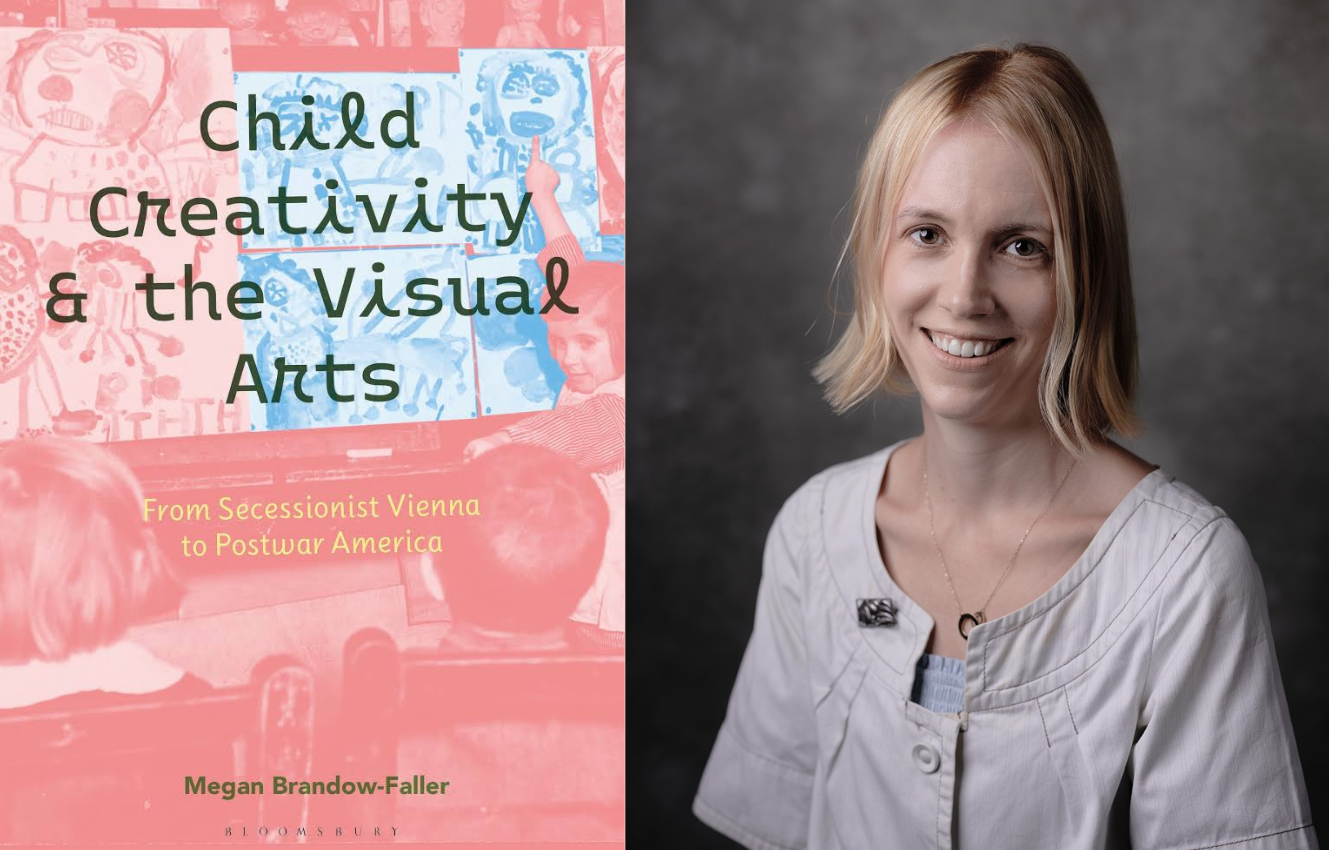
© Image: Dr. Megan Brandow-Faller, Book Cover (Publisher: Bloomsbury)
This event is part of our Austria-America250 event series, which commemorates the United States Semiquincentennial and celebrates the shared past, present and continued friendship between the USA and Austria through a variety of cultural and educational events.